How Holiday Lighting Companies Get HOA and Shopping Center Clients
· 8 min read
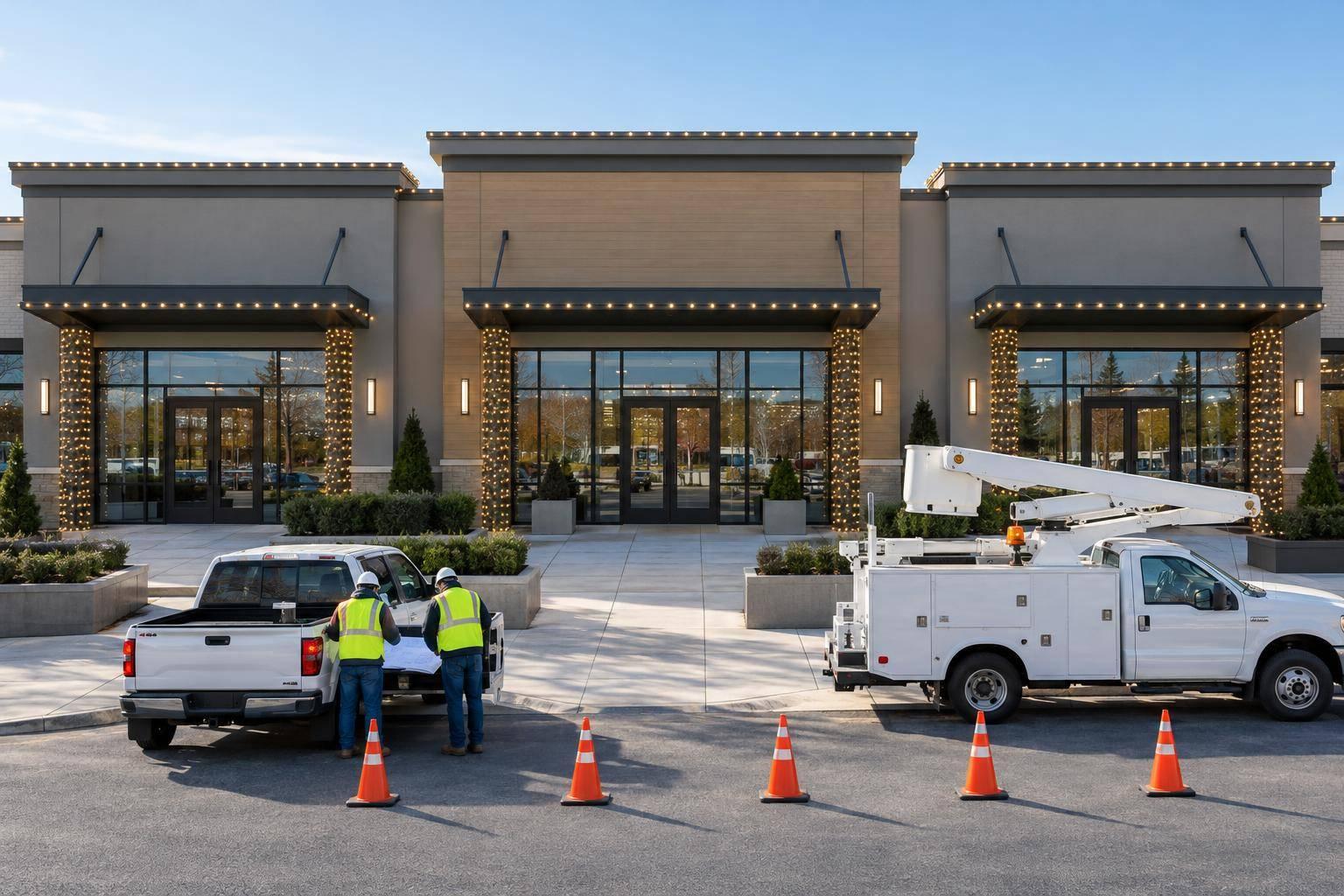
To win HOA and shopping center lighting contracts, contact the buyer by name, confirm who approves spending, and submit a proposal the crew can deliver. This article is published by The Headline Theory, which runs commercial outreach for holiday lighting companies. Since August 2026, its holiday lighting campaigns have produced 103 interested replies from commercial decision makers for 7 holiday lighting clients, and hospitality properties and retail centers produced the most interested replies. Across its email campaigns, emails sent to the named decision maker drew about twice as many interested replies per contact as emails sent to a general contact.
The sales process depends on the property:
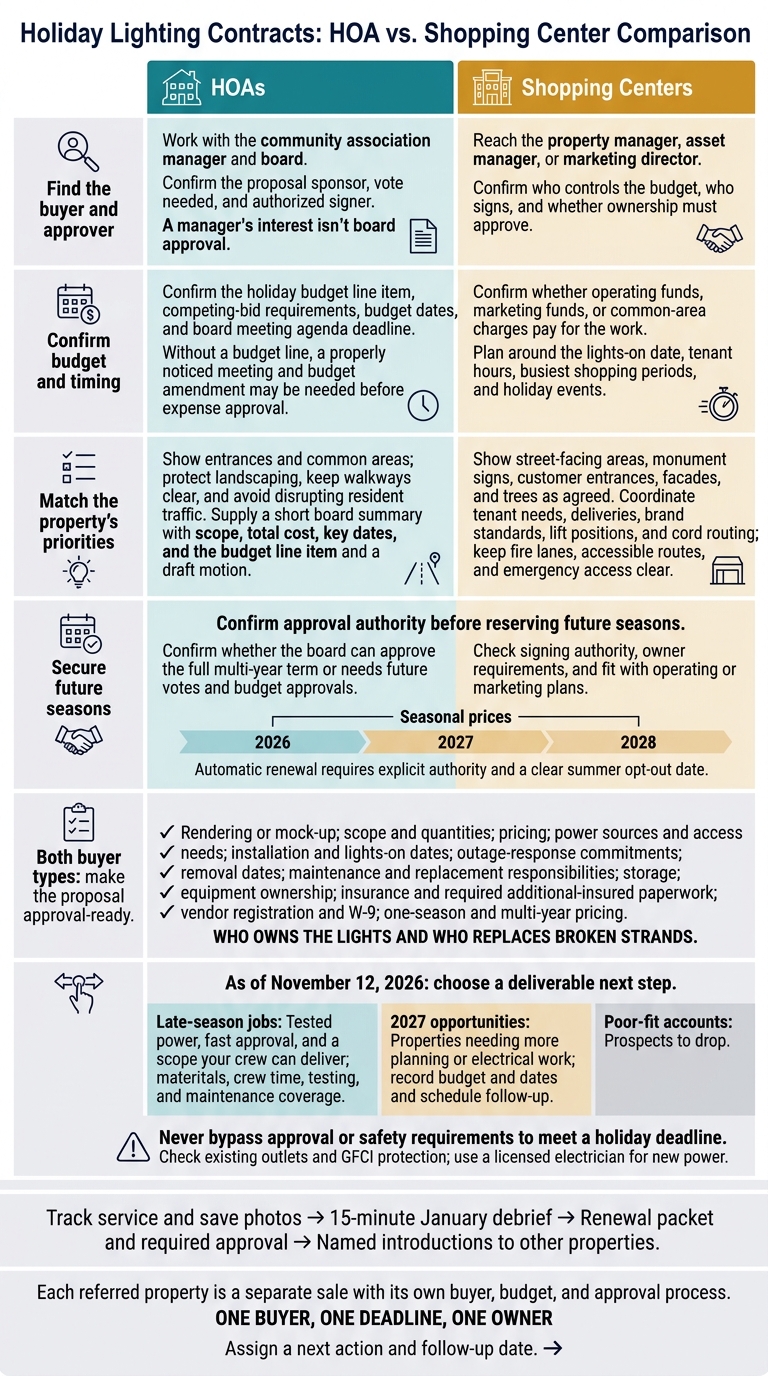
- HOAs: Work with the community manager and board. Confirm budget dates, meeting deadlines, and the vote needed.
- Shopping centers: Reach the property manager, asset manager, or marketing director. Plan around entrances, tenant hours, and holiday shopping.
- Both: Include a design, pricing, installation and removal dates, maintenance, storage, ownership, and insurance. Use service records, photos, and referrals to support renewals and reach other properties.
This late in the season, accept only jobs that fit crew capacity, safe power access, and approval deadlines. Move larger projects into next season's pipeline, and offer multi-year terms only after checking the buyer’s approval authority.
Get HOA Board Approval
A manager’s interest isn’t board approval. The board’s calendar determines whether you can install this season or need to plan for next year.
Confirm Board Votes and Budget Dates
A named HOA contact can help move your proposal along, but the board controls spending. Ask the community association manager whether the budget includes a holiday line item, who will sponsor the proposal, whether competing bids are required, and when the next board meeting agenda closes. Confirm the vote needed for approval and who is authorized to sign.
Without a budget line, the board may need a properly noticed meeting to amend the budget before approving the expense. Check whether there’s time for those steps within your remaining installation window.
Prepare Your HOA Proposal
Show a nighttime rendering or mock-up of the entrances and common areas, plus before-and-after photos of similar properties. Spell out quantities, power sources, access needs, and exclusions. Explain how you’ll protect landscaping, keep walkways clear, and avoid disrupting resident traffic.
Give the manager a short board summary with scope, total cost, key dates, and the budget line item. Include a draft motion the board can read aloud and vote on.
Your proposal should also cover installation and lights-on dates, outage-response times you can meet, removal dates, storage, and equipment ownership. Attach insurance documents and any required additional-insured paperwork. Complete vendor registration before scheduling crews.
Present both one-season and multi-year pricing. Clearly assign maintenance and replacement responsibilities so the board can compare the full seasonal cost.
Take Only HOA Jobs You Can Deliver Safely
Accept entrance displays or phase-one work only after confirming site conditions, written approval, material availability, crew time, testing, and maintenance coverage. Check existing outlets and GFCI protection. If the site needs new power, use a licensed electrician.
Never bypass approval or safety requirements to meet a holiday deadline. Offer an early December lights-on date only if your schedule supports it. Otherwise, record the HOA’s next budget and board dates, and schedule a planning conversation for next season before bids are due.
Retail-center buyers base approval on tenant traffic and visibility, so the next step calls for a different sales process.
Match Shopping Center Buyer Priorities
Shopping centers follow a different approval process than HOAs. Build your pitch around tenant traffic and store hours - not board votes.
Confirm Who Approves the Shopping Center Contract
Start with the center’s lights-on date, tenant hours, and busiest shopping periods. Ask the property manager or asset manager who controls the budget and who signs the contract. Bring in the marketing director if lighting supports tenant promotions or holiday events. Confirm whether operating funds, marketing funds, or common-area charges will pay for the work, and whether ownership needs to approve it.
Find out which street-facing areas and customer entrances matter most. Ask which tenants need coordination and whether holiday events, tenant restrictions, or brand standards affect the plan. Keep the discussion focused on visibility, entrances, and tenant coordination.
Prepare Your Shopping Center Proposal
Lead with how you’ll coordinate with tenants and keep fire lanes and delivery routes clear. Use an annotated site photo or nighttime mock-up to show the agreed-upon monument signs, entrances, facades, and trees. Spell out quantities, installation and takedown dates, maintenance, storage, ownership, insurance, and required vendor paperwork. Include one-season and multi-year pricing, making clear who owns the lights and who replaces broken strands.
Explain how power sources, attachment methods, facade conditions, lift positions, and cord routing shape the design. Schedule around deliveries and tenant hours, keeping accessible routes and emergency access clear. Designate one property contact for outage reports, give a response time you can meet, and explain any weather-related service limits.
Keep Late-Season Shopping Center Jobs Within Capacity
Accept only jobs that fit your installation and maintenance windows around Thanksgiving and the holiday shopping rush. A smaller display visible from the street or lighting at a priority entrance may fit your schedule; a full-center installation may not.
Use existing power where safe. Confirm early-morning or after-hours access with management so crews can keep fire lanes and delivery routes clear and avoid disrupting customer traffic. If capacity is tight, quote a limited scope for this season with a separate expansion for next season. Agree on a post-season review date and a date for next season's proposal, and use the first installation to build the renewal package.
Turn Your First Installation Into Multi-Year Work
Once the first installation is complete, secure the next seasons before the buyer’s attention shifts elsewhere.
Offer Multi-Year Terms in Your First Proposal
Show a separate price for each season of the term so the buyer can approve the full term in one vote. If you offer a lease, spell out that you own and store the lights, the fee stays flat, and maintenance is included.
Confirm approval authority before reserving future seasons. For HOAs, ask whether the board can approve the full term or needs future votes and budget approvals. For shopping centers, check signing authority, owner requirements, and whether the term fits operating or marketing plans. Use automatic renewal only with explicit authority and a clear summer opt-out date.
Track Service and Request Renewal Approval
Track completion, outages, response times, repairs, takedown condition, damage, and feedback. Measure those results against HOA board expectations or shopping-center visibility and traffic goals. While the display is up, ask the HOA manager and board contact - or the shopping center manager and marketing contact - whether they want the same scope next season. Move the renewal forward if the budget and approval calendar allow.
Use the installation record to gauge readiness for renewal. After takedown, schedule a short post-season debrief with your HOA or shopping-center contacts. Compare service records with resident or tenant feedback, flag gaps in coverage, and agree on scope changes. Build those notes into a renewal packet with photos, updated pricing, and insurance documents, then route it through the required approval process.
Use Photos and References to Win the Next Property
Once the renewal packet goes out, use the finished project to show the next named decision maker what you can deliver. Get permission in the contract to use installation photos for marketing, and save them by property and year for future proposals.
Use HOA entrance and common-area photos when approaching other associations. For other shopping centers, use photos that show retail visibility and entrances. Ask for a named introduction to another property in the portfolio, but treat it as a separate sale - with its own buyer, budget, and approval process.
Conclusion: Finish This Season Safely and Plan for the Next
Set a Next Action for Every Property
Before chasing new leads, give every active property one clear next step. Check crew availability and maintenance capacity, then sort HOA and shopping center prospects into three groups:
- Late-season jobs: Tested power, fast approval, and a scope your crew can deliver.
- Next-season opportunities: Properties that need more planning or electrical work.
- Poor-fit accounts: Prospects to drop.
For each HOA, record the manager, board contact, budget deadline, and meeting date. For each shopping center, log the property manager, asset manager, or marketing director, plus the approval deadline, compliance requirements, and access restrictions.
Use the same tracking system for both buyer types: one buyer, one deadline, one owner. Give every property an owner, a next action, and a follow-up date. Include post-season site walks and early reviews for next season.
Make each proposal ready for approval with a rendering, installation and takedown dates, maintenance, storage, insurance, a W-9, and multi-year pricing. Promise only what your crew can deliver safely.
If next season's pipeline depends on faster prospect research, start building named-buyer lists now.
Get Help With Prospect Research and Outreach
For help finding named HOA and shopping center buyers, use The Headline Theory’s holiday lighting lead generation service. For the full commercial sales process beyond HOAs and retail centers, read how to land commercial holiday lighting clients.
FAQs
How can you find an HOA’s board contacts?
The board has the final say, but start with the property management company rather than approaching board members directly. Managers handle vendor relationships and RFPs, then recommend vendors to the board.
If there’s no management company, contact the board president. For questions about decor aesthetics, you can also reach out to the landscape or architectural review committee.
How can you measure a retail lighting display’s impact?
Track how your display supports the retail center’s goals: visibility from main roads and entrances, the look of storefronts, rooflines, and parking-island trees, tenant participation, and holiday foot traffic.
Include before-and-after-style photos of these locations in your proposal, along with exact installation and takedown dates. Use findings from on-site walkthroughs and maintenance response results to plan next season’s scope and shape a multi-year agreement.
How should you handle a property management change mid-contract?
The agreement typically stays with the association or property owner - not the individual manager. Contact the new property manager or board president right away to introduce your company and confirm the existing contract.
Send the signed agreement, proof of insurance, and current service schedule. Offer a short site walkthrough to review the display scope, explain maintenance procedures, and show them how to contact you for service requests.
Related posts
One company per service area. See if yours is still open.