How to Land Commercial Holiday Lighting Clients
· 7 min read
How to Land Commercial Holiday Lighting Clients
To land commercial holiday lighting clients, start with the person who approves the budget - not a general inbox. Then book a site walk and quote the full season: design, installation, maintenance, takedown, and storage.
Here’s the approach:
- Choose properties you can serve. Match the job to your crew, equipment, access, and service capacity.
- Make approval simple. Confirm the buyer, budget, deadlines, and vendor paperwork before sending a clear proposal.
- Earn the next season. Document the finished work and repairs, discuss renewal before takedown, and ask for introductions to other properties.
If you’re reading this in the fall, keep late-season work and next season’s bids on separate tracks: pursue jobs you can safely deliver now, and record next year’s scope and approval dates.
Find and Contact the Decision Maker
Match Each Property to Its Buyer
Find out who approves the budget - and who helps get the request to them. A manager might recommend your company, but ownership may sign the agreement.
| Property type | Likely contacts | Approval concern and proposal emphasis |
|---|---|---|
| Retail centers and shopping plazas | Property manager, asset manager, marketing director, landlord | Foot traffic and shopping-season readiness; focus on entrances and visibility |
| Hotels and restaurants | Hotel general manager, facilities director, ownership group, regional operations manager; restaurant owner or general manager | Guest experience and brand presentation; focus on arrival areas, visibility, and approved work hours |
| Office parks | Facilities manager or building owner | Professional appearance and minimal tenant disruption; focus on employee and visitor access |
| HOAs and apartment communities | HOA board, community association manager, property management company | Board approval and community presentation; focus on common areas and entrances |
| Municipalities and downtown districts | City parks department, public works director, downtown development authority, procurement officer | RFP and public-access requirements; focus on coordinated installation and maintenance response |
Look for buyers on property and management-company websites, LinkedIn, municipal directories, and procurement pages. If you find only a shared inbox, ask who handles holiday lighting or vendor approval.
Contact Named Buyers, Not Just General Inboxes
This article is published by The Headline Theory. In its campaigns, emails to named decision makers received more than twice as many interested replies per contact as emails to shared inboxes. Hospitality properties and retail centers produced the most interested replies.
Since August 2026, those campaigns have covered 7 holiday lighting clients and generated 103 interested replies from commercial decision makers. These results come from those campaigns; they aren’t industry benchmarks.
Before you send an email, check that the person still handles the property and its holiday program. Keep separate records for the budget approver, day-to-day contact, and vendor-registration contact. That way, your proposal can reach everyone involved in approval.
Ask for a Site Walk
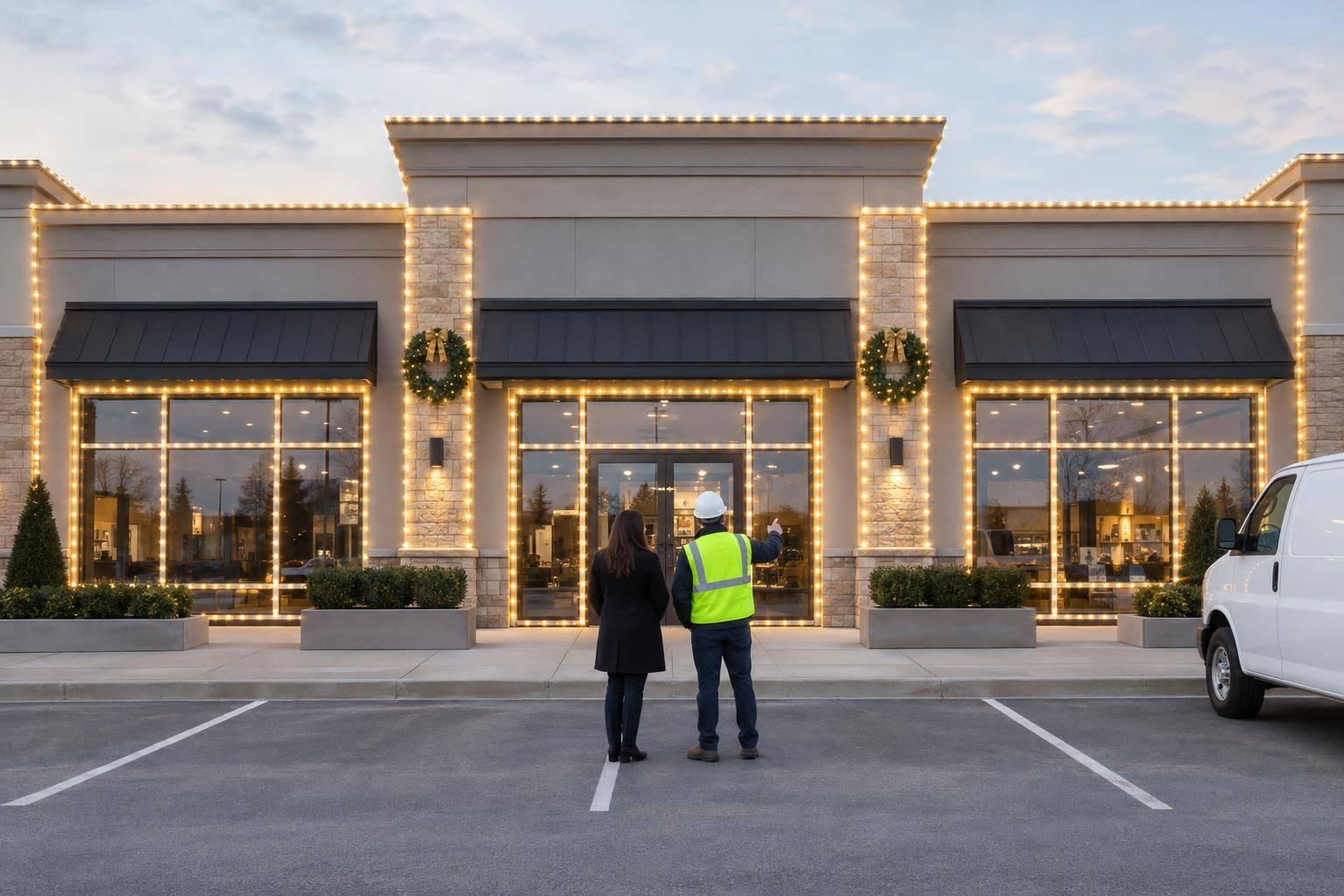
Once you reach the right buyer, ask promptly for a short site walk. Keep the request focused on their display needs and an installation window you can meet.
During the walk, confirm who owns the budget, how approval works, which vendor documents you need, and the installation and removal deadlines. Track named contacts, site walks, proposals, and signed agreements - not email volume.
Gather measurements, photos, and approval requirements during the visit before pricing the work.
sbb-itb-0b9cb3a
Make Your Proposal Easy to Approve
Turn your site-walk notes into a proposal the buyer can review and approve without extra back-and-forth. Base the price on the scope, access, and risks.
Inspect the Site Before You Price the Work
Measure rooflines and display areas in feet. Record attachment points, working outlets, circuit capacity, roof access, lift clearance, and truck access. Cover the street approach, arrival areas, and dwell areas.
Before you commit to a price or installation window, confirm ground conditions, landscaping, pedestrian routes, approved work hours, fall-protection needs, and insurance requirements.
Include the Design, Dates, and Service Terms
Quote a seasonal service package, not just an installation. Include a design mock-up or photos of past work, identify the areas you’ll decorate, and specify commercial-grade materials. Explain what yearly design updates include and when redesign fees apply.
Give installation and takedown windows, along with maintenance response times. Make clear who stores the materials and who owns them. Attach the Certificate of Insurance and any required additional-insured endorsement.
Compare One-Season and Multi-Year Pricing
Make included services and exclusions easy to find. For each option, spell out the price, scope, dates, maintenance, storage, ownership, and renewal terms. Explain how additions or design updates change the price.
Offer multi-year savings only when your costs support them. Don’t treat a longer agreement as an automatic discount.
| Proposal item | One-season agreement | Multi-year agreement |
|---|---|---|
| Pricing structure | State the season’s price and scope | State annual pricing and adjustment terms |
| Design continuity | Approve the current display | Define retained designs and approval steps for design updates |
| Scheduling | Confirm this season’s windows | Define how future installation windows are reserved |
| Storage | Assign responsibility after takedown | Define custody and access between seasons |
| Maintenance | Specify seasonal coverage | Define recurring coverage |
| Rebooking terms | State the rebooking deadline and process | Define term, cancellation, and renewal conditions |
Include the renewal deadline in the proposal so you can revisit the contract before installation.
Turn Your First Installation Into a Multi-Year Contract
Once the first install is live, use the results to earn the next contract.
Discuss Renewal Before Installation
Before work begins, confirm who approves the renewal and when they’ll decide. Treat it as a conversation about next steps, not a hard sell. A one-season project becomes a multi-year commitment only when both sides approve the new agreement.
Give the buyer proof before asking for a signature. Schedule installation around property traffic, then walk through the finished display with the manager to check it against the approved design. Address any differences promptly.
Review Results Before Takedown
With permission, photograph the finished display and keep a service log. Together, these records should document delivery, response times, repairs, and compliance with the service-level agreement (SLA).
While the display is still lit, confirm the renewal scope and any approved changes. Bring next season’s dates, and clearly separate design updates from maintenance. Ask for the multi-year commitment before takedown.
Ask for Introductions to Other Properties
Once you’ve shown the buyer they can count on your service, ask for introductions to managers of other properties in the same ownership group.
Get permission to share approved photos and service logs so those managers can see evidence of your work. Make the request while the display is still visible or at takedown - before the buyer’s attention shifts to next season.
Confirm Your Next Steps
Once you send the proposal, give each lead a checklist with firm deadlines. Find the named buyer on LinkedIn, then confirm who owns the budget and when the decision is due.
Keep active installs and next season’s bids on separate tracks. For late-season jobs, work backward from the live date. Set immediate approval and material deadlines before promising installation. For next season’s bids, start outreach early and track decision deadlines leading into late-summer and early-fall contracting.
Before handing the job from sales to production and scheduling the crew, check that the job file includes the site walk, written design approval, insurance documents, installation and takedown dates, maintenance terms, storage responsibility, and renewal terms. Give every missing item an owner and a due date.
FAQs
How can you win commercial clients without a portfolio?
Start with smaller, independent hospitality or retail properties, where decisions tend to be more direct. Highlight your professional background, liability insurance, safety practices, and reliability.
Walk the property and put together a detailed plan that covers its goals, installation, maintenance, and takedown dates. Don’t have photos of past lighting projects yet? Show how you’ll solve the property’s day-to-day problems to build trust. After your first installation, take high-quality daytime and nighttime photos to build your portfolio.
How should you follow up on an unanswered proposal?
A steady follow-up schedule helps you stay on the decision maker’s radar without overdoing it. Email your proposal in week one, then call in week two to answer their questions. In week three, send an email with more helpful information. If possible, follow up in person in week four.
Send your final follow-up in week six. State your booking deadline clearly to encourage a commitment before your installation schedule fills.
Which late-season jobs should you turn down?
Turn down jobs that put safety or quality at risk. That includes projects with inadequate insurance coverage or too little time for a site survey and quality work. Pass on clients who can’t accommodate the required equipment, off-hours scheduling, or safe access to power and installation areas.
Protect your reputation and save your resources for multi-year opportunities. Focus on clients who make room for proper planning and value installation, maintenance, and storage.